
Understand What the Single Zero Means for Every Bet
 Available in US
A guide to the single-zero wheel, roulette payouts and odds, free play, and the limits of betting strategies.
European Roulette’s Single-Zero Wheel
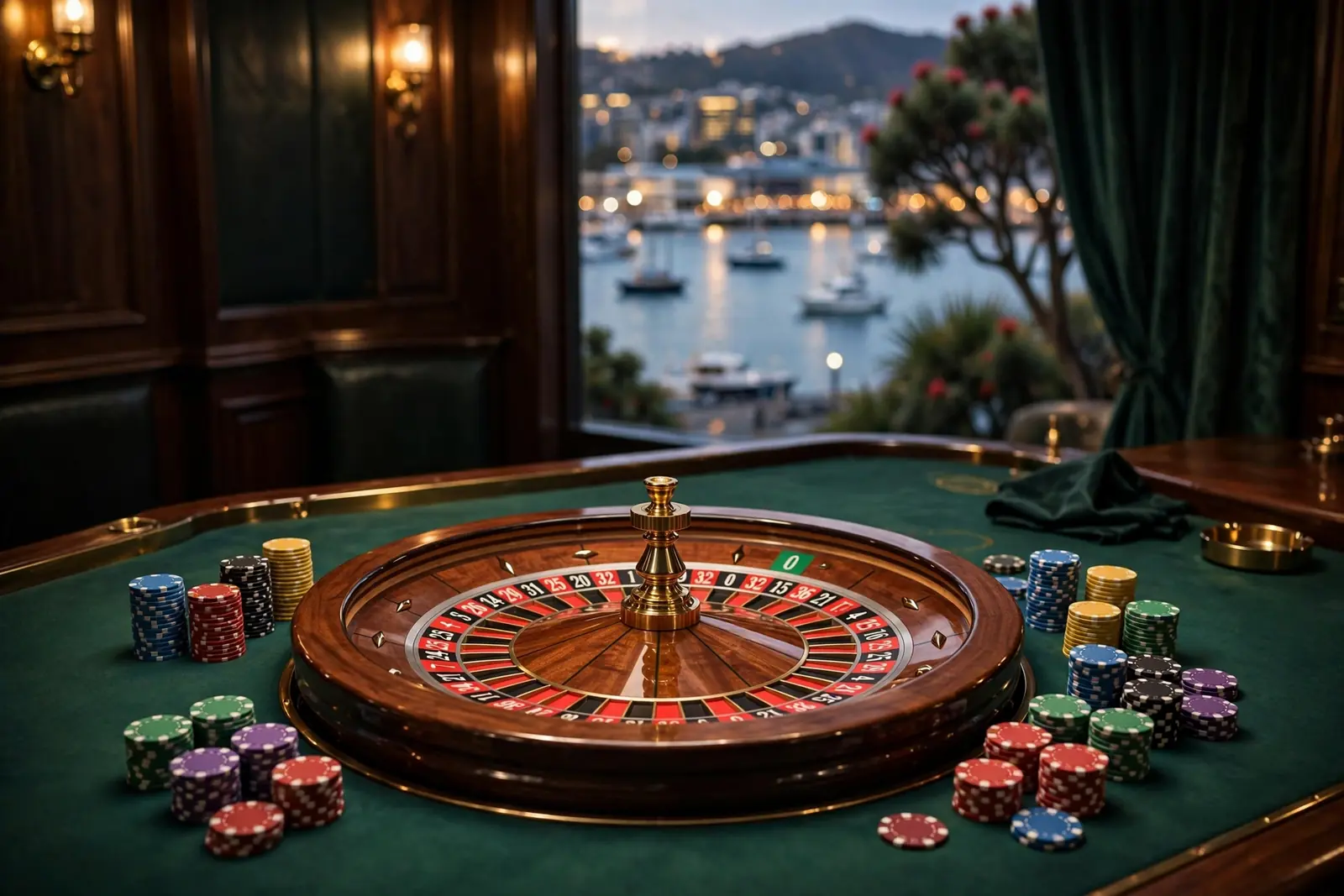
The defining feature of European Roulette is its single-zero wheel. It has 37 pockets in total, with one pocket marked zero and the others numbered. That layout is the starting point for identifying the game, whether you encounter it at a physical table or as an online European roulette game.
The zero is a pocket in its own right, not an empty space between rounds or a marker that can be ignored. When the wheel stops, the ball lands in one pocket. The result is determined by that landing; the wheel does not treat zero as a pause or a reset. In a digital version, the animation may look different from one game to another, but the defining layout remains the single-zero wheel.
That layout also underpins the game’s house edge: 2.70%. The house edge is the built-in mathematical advantage held by the casino over the long run, expressed as a share of the amount wagered. It is not a fee taken from every stake, nor a prediction about what will happen in a short session. A player can win on a particular spin, but the wheel’s structure gives the casino an advantage across repeated play.
European roulette gives you a familiar single-zero format to consider when choosing a casino game in New Zealand. This list offers a quick reference to the available operator details for your 2026 search.
-
Neospin
- License
- Tobique Gaming Commission, licence no. 0000064
Neospin lists a licence from the Tobique Gaming Commission, number 0000064. You can use this as a reference point when considering the operator.
-
N1 Casino
- License
- Malta Gaming Authority, licence no. MGA/B2C/394/2017
N1 Casino lists a Malta Gaming Authority licence, number MGA/B2C/394/2017. This gives you a specific licensing detail to check when assessing the operator.
-
Lamabet
- Payout speed
- 1-3 business days
Lamabet lists a payout speed of 1–3 business days. You can factor this stated timeframe into your consideration of the operator.
-
BitStarz
- License
- Curaçao Gaming Authority, licence no. OGL/2024/165/0185
BitStarz lists a Curaçao Gaming Authority licence, number OGL/2024/165/0185. This provides you with a specific licensing detail for reference.
-
Play Grand
- License
- Malta Gaming Authority, licence no. MGA/B2C/370/2017
Play Grand lists a Malta Gaming Authority licence, number MGA/B2C/370/2017. You can refer to this detail when considering the operator.
-
Zotabet
- License
- 07017519840
- Payout speed
- 1-3 business days
Zotabet lists licence number 07017519840 and a payout speed of 1–3 business days. These are the stated details available for your reference.
-
Ricky Casino
- License
- Tobique Gaming Commission, licence no. 0000002
Ricky Casino lists a Tobique Gaming Commission licence, number 0000002. You can use this licensing information as a reference when considering the operator.
-
Wintino
- Payout speed
- 1-3 business days
Wintino lists a payout speed of 1–3 business days. You can take this stated timeframe into account when considering the operator.
-
7Bit Casino
- License
- Tobique Gaming Commission, licence no. 0000091
7Bit Casino lists a Tobique Gaming Commission licence, number 0000091. This gives you a specific licensing detail to refer to.
The zero is central to that structure. It is an additional possible result alongside the numbered pockets, and it affects the relationship between the wheel and the game’s payouts. The 2.70% figure is therefore not an incidental detail attached to the name: it describes the standard single-zero European layout. When a game is labelled European Roulette, checking that it has one zero is a straightforward way to confirm the feature that defines the variant.
Online, the name can appear in menus alongside versions with different presentation or added features. A title alone may not tell you everything about how a particular game is arranged. Look for the wheel itself and confirm that it shows one zero. If the displayed wheel has a different layout, it is not the standard single-zero European wheel, even if the game shares familiar roulette imagery.
The distinction matters because a game’s appearance can invite assumptions. A virtual wheel, a live video feed and a simplified interface may all present the same underlying pocket arrangement, but visual style does not set the house edge. The relevant detail is the wheel’s structure. For European Roulette, that means 37 pockets, including one zero, and a house edge of 2.70%.
This is a useful reference point when comparing game descriptions or deciding whether an online roulette title matches the version you intended to find. It also helps separate the basic game from claims about special features, graphics or presentation. Those may change the experience of watching a round, but they do not alter the definition of a single-zero wheel.

A search for a free European roulette game online may lead to a practice version, while a real-money game involves stakes. In either case, the phrase “European Roulette” refers to the wheel variant, not to a guarantee about the interface or the outcome. The visual wheel can help you identify the layout; the house edge describes the casino’s long-run mathematical advantage. Neither tells you what the next spin will produce.
The single-zero design is simple to state, but it is the reference that makes the name meaningful: one zero, 37 pockets in all, and a 2.70% house edge. Once those features are clear, the label is easier to interpret without confusing the wheel’s basic identity with how a particular game looks or is presented.
What Free Play Can—and Cannot—Show You
A free European Roulette game gives you a way to explore the screen and follow a round without putting money at stake. It can be useful before you decide whether the format suits you: you can see where the wheel, betting layout and controls appear, and watch how the game signals that betting has closed and a result has been recorded.
Free play is generally a mode offered within a game, rather than a separate version of roulette with different rules. Depending on the game, you may be able to select chips, place them on the layout, clear or adjust bets, and watch a spin resolve. That makes a practice session useful for learning the interface at your own pace. If you make a mistaken click, you can observe what happened without losing a real stake.
The exact controls vary. A browser-based game may open without a download, while another version may be accessed through an app or require a particular device or account. “Free” describes whether you are wagering money in that session; it does not guarantee that every game can be opened anonymously, on every device, or without software. Check the game’s own opening screen for its available mode and instructions.
A free mode can also help you understand the rhythm of a round. You can follow when bets are accepted, when the spin begins, and when the result appears. Some interfaces display recent results or keep a bet on the layout between rounds. These features can make the screen easier to read, but they do not tell you what the next result will be. A record of past spins is a display of what has happened, not a forecast.
The main limit is that practice does not alter roulette’s probabilities. Spins are independent: earlier results do not affect the probability of outcomes on later spins. A run of one colour, number range or other result in a free game does not make a different result more likely next time. Nor does repeating the same practice session provide a way to predict the wheel. The game may look familiar after many rounds; familiarity is not an advantage over chance.
Free play also cannot show you what it feels like to stake your own money. With no personal funds at risk, you may make choices more casually than you would in a real-money session. A practice balance is not income, and a simulated win is not a cashable return. Treating it as evidence that you can reliably win later would confuse learning the controls with predicting outcomes.
The phrase “free spins” can refer to something different from a free roulette game. In some contexts it means promotional turns or credits, rather than a practice mode. Read the screen’s wording carefully so you know whether it is describing play with no real-money stake or an offer with conditions. The game interface alone may not explain the terms attached to a promotion.
Live European Roulette may present a different experience from a computer-generated game because a dealer and physical wheel are shown on screen. Whether a live table offers a free mode depends on the particular game and its access options. A free simulation, if available, can still help you learn the layout of that interface, but it is not the same as taking part in a real-money live session.
Use practice for a limited, practical purpose: learn how to navigate the screen, watch a round from start to finish, and identify the controls before deciding whether you want to continue. It cannot establish a winning approach, make a future spin more predictable, or remove the possibility of losing when money is involved.
European vs American Roulette: The Zero Makes the Difference
The main difference between European and American Roulette is visible on the wheel. European Roulette has 37 pockets, including one zero. American Roulette has 38: a single-zero pocket and an additional double-zero pocket. That extra pocket changes the mathematics even though the basic idea of betting on where the ball will land remains the same.
European Roulette
Features a single-zero wheel with 37 pockets and a house edge of 2.70%.
American Roulette
Features a double-zero wheel with 38 pockets and a house edge of 5.26%.
In European Roulette, the single zero is the wheel’s only green pocket. On an American wheel, both zero and double zero are green. The other pockets carry numbers, but the extra double zero is not just another space on the wheel: it gives the casino an additional winning outcome that is not matched by an equivalent increase in the standard payouts.
This difference is reflected in the house edge, the mathematical advantage built into the game. European Roulette has a house edge of 2.70%, while American Roulette’s is 5.26%. The larger edge on the American wheel comes from the additional pocket. For a player making the same kind of bet under the standard rules, there are more ways for the casino to win on an American wheel, while the payout does not rise to compensate.
The house edge is a long-term measure, not a prediction of what will happen in a particular round. It does not mean that the casino wins every time, or that a European game will produce a better result on your next spin. It describes the effect of the wheel layout across repeated play. A short session can end very differently from that mathematical expectation.
When comparing games, check the wheel itself rather than relying only on the title displayed on screen. A game labelled European should show a single-zero wheel; an American game has both zero and double zero. The pocket count is a straightforward way to confirm which layout is in use. If the layout and the game name seem inconsistent, do not assume that the title alone tells you the rules.

The distinction matters even if you place bets on the same kinds of outcomes in both versions. A bet can look familiar from one game to the other, but the number of pockets determines how often a winning result is available relative to the payout. The extra double zero makes the American version less favourable to the player under standard rules. It is a small visual addition with a measurable mathematical effect.
This comparison is about the wheel, not a promise that one version is a way to win. European Roulette has the lower house edge of the two, but the casino still retains an advantage. Choosing the single-zero layout reduces that built-in disadvantage compared with the double-zero layout; it does not remove it. A free European game can display the same basic wheel arrangement, but the layout alone says nothing about whether a real-money result will be favourable.
If you are deciding between the two, the practical point is simple: identify whether the wheel has one zero or two, then consider the corresponding house edge. European Roulette has fewer pockets and a lower house edge; American Roulette adds a double zero and carries the higher edge. Those are the defining differences, and the extra pocket is the reason they matter.
Reading the Roulette Table and Its Payouts
A European Roulette table presents the available bets in two places: a numbered betting layout and a set of labels for broader selections. The numbered area is usually arranged in rows and columns, with separate spaces for zero and for bets covering groups of numbers or colours. The labels around it identify outside bets, such as red or black, odd or even, and ranges of numbers. The layout is a map for placing chips; it is not a picture of the wheel’s sequence.

That distinction matters when you see called bets. These are named groups of numbers defined by where those numbers sit around the wheel, not by where they happen to appear on the table. A called bet may therefore include numbers spread across several rows of the betting layout. In a live game, the dealer or interface may show those selections as chips on the table, but the group itself refers to wheel positions.
A displayed payout tells you what a winning selection returns under that game’s rules. The table’s pay information may appear beside the layout, in a help panel or in the game rules. Read the specific game’s display rather than assuming every online version presents it in the same way. The layout can look familiar on a mobile screen or in a live game, while the controls and placement of the payout information differ.
The zero has its own space on a European table. It is not a colour or an even-money outside selection; it is a numbered outcome that can be selected directly. If you are checking what zero pays, look for the return listed for a straight-up selection on that particular game’s pay table. The table’s labels and help screen should make clear which selection is being paid. Do not confuse a payout amount with a payout percentage: one describes the return for a winning bet, while the other summarises the game’s theoretical return across play.

A specialist affiliate review reports a 97.30% payout percentage for European Roulette and 94.70% for American Roulette. Those figures are theoretical percentages, not a promise about what a session will return or a schedule of payments for each bet. The payout percentage also does not tell you which chip position to use; that is what the table layout and its rules explain.
When comparing an online table with a physical one, check the game information for the variant and the displayed payouts before placing a chip. A free-play table can help you identify the controls and read the layout without staking money, while a live table may present the same choices through a dealer-led interface. Neither the screen size nor the way the table is drawn changes what a listed selection means. For any version, the useful habit is simple: match the selection you intend to make with its label, then confirm the pay information shown for that game.
Roulette Odds: What Each Bet Risks
European roulette odds describe two related things: the chance that a bet wins on a spin, and the amount returned if it does. A bet covering fewer outcomes is harder to land, while one covering more outcomes is more likely to win. The payout changes accordingly, but the relationship is not perfectly even: across repeated play, the casino retains a mathematical advantage.
For single-zero European Roulette, that house edge is 2.70%. It represents the game’s average theoretical loss as a proportion of the amount wagered over a very large number of spins. It is not a prediction of what will happen in a short session. You might win, lose or finish level over a limited run; the edge describes the long-run effect of the rules, not a result guaranteed on any particular visit.
How the type of bet affects risk
A straight-up bet on one number has a lower chance of winning than a bet that covers a group of numbers. Its payout is correspondingly larger. Bets covering broader groups offer more frequent wins but smaller payouts. Neither choice changes the underlying house edge in standard European Roulette: the amount at risk and the pattern of wins differ, while the game’s built-in disadvantage remains.
That distinction matters when comparing bets. A high payout can look attractive, but it comes with a lower chance of collecting it. A bet that wins more often can feel safer, yet a run of losses is still possible, and its smaller returns do not remove the house advantage. The result of one bet also does not tell you whether the next one is likely to win.
Call bets are another way of describing wagers tied to number positions on the wheel. Their names and groupings may sound different from bets made on the table layout, but they do not create a separate probability system. The wheel outcome determines whether the covered number or numbers win; the bet’s coverage and payout determine the result for your stake.
The label on a game does not, by itself, establish its odds. A themed version or a product name such as “gold” may change presentation, but you need to check the actual rules and payout schedule before treating it as standard European Roulette. If the game uses a different wheel or special features, its odds may differ. Do not infer a better chance from a name or a prominent prize.
Each spin starts independently
Roulette spins are independent events. Previous results do not alter the probability of future outcomes. If a number has appeared repeatedly, that history does not make another number due; if it has not appeared for a long time, its chance has not increased. The wheel has no memory, however persuasive a sequence may look on the results display.
This also means a past win cannot protect the next stake, and a losing run does not make a recovery more likely. Every real-money bet can lose. Consider the amount you place at risk as money you may not get back, rather than as a step toward a result that the previous spins have made more likely.
Playing Roulette Online in New Zealand
For anyone considering European Roulette online in New Zealand, the important question in 2026 is not only what a casino offers, but what rules apply to the service. The country is moving from a system with no domestic online-casino licensing regime to one that provides for local licences. That change is underway, and the position depends partly on when an operator began serving customers and whether it takes the steps required during the transition.
The Online Casino Gambling Act 2026 took effect on 1 May 2026, establishing New Zealand’s first domestic licensing system for online casino gambling. It does not mean that the full system is already operating: the licensed regime is expected to be fully in place in 2027. Until then, the Act’s transitional provisions shape which existing services may continue.
Who oversees the framework?
The Department of Internal Affairs is New Zealand’s primary gambling regulator and oversees the online-casino licensing framework. The Gambling Commission has a separate licensing role: it hears and decides casino licence applications, issues online casino licences and approves changes to licence conditions. In practical terms, the Department oversees the framework, while the Commission makes licensing decisions.
Regulatory Roles
The Department of Internal Affairs is the primary regulator overseeing the framework, while the Gambling Commission specifically handles licensing decisions and approves changes to licence conditions.
That distinction matters when assessing claims about oversight. A site operating during the transition should not be treated as though it already holds a New Zealand online casino licence. The new system is being introduced in stages; the existence of a law does not, by itself, establish that every service available to New Zealanders has been licensed under it.
What the transition means
Only providers that were already offering online casino services in New Zealand before the Act began may continue during the transition, and only under its transitional provisions. That permission is temporary: the transition runs from 1 May 2026 to 1 December 2026. Providers that have not applied for a licence must stop conducting online casino gambling in New Zealand by the end of that period.
The Act’s new licensing requirements are also intended to bring stricter age and identity checks. These are safeguards operators must implement as the regime develops; they are not a reason to assume that every currently accessible site has completed New Zealand licensing. Unlicensed operation is expected to become an offence around mid-2027, and operators without a licence may face enforcement action and fines of up to NZ$5 million.
New Zealand law has not permitted online casinos to be based domestically under the Gambling Act 2003. The 2026 legislation establishes a domestic licensing regime for online casino gaming, rather than simply confirming that local online casinos were already operating legally. During the transition, online casino gambling must not be advertised to people in New Zealand.
Offshore sites and customer recourse
Before the 2026 Act, online casino gambling supplied from outside New Zealand was not licensed or supervised by a New Zealand regulator. A customer who wagered with an offshore website during that period had no domestic government recourse if a dispute arose. The new framework changes the licensing landscape, but the transition means the distinction between an offshore service and a locally licensed one remains important.

Offshore websites may still be accessible to New Zealand residents, and a player is not subject to a fine or criminal prosecution simply for using one without a local licence. Accessibility, however, is not the same as local regulatory oversight or a route to domestic government assistance. A site’s own claims about its status should be read in light of the staged introduction of licences and the limits of what a New Zealand regulator supervises.
This is why a search for the best European Roulette site for New Zealand players cannot be answered responsibly by a game label or a polished homepage alone. A casino may display European Roulette without being part of New Zealand’s licensing system. Nor does the fact that a free online game is available establish that the same provider’s real-money service is locally licensed. Free play and money play are different choices, but neither makes an operator’s regulatory status self-evident.
Before you decide to play
If you are considering real-money roulette, distinguish between what is known about the local framework and what a particular site claims about itself. The Gambling Commission is responsible for licensing decisions, while the Department of Internal Affairs oversees the framework. A licence claim should be treated as a specific regulatory assertion, not as a general promise of safety. No licence or oversight arrangement can make a roulette result predictable.
Be cautious with promotional offers as well. Operators may attach eligibility conditions, expiry dates, game-contribution rules and withdrawal restrictions to bonuses. Bonus money must be wagered 50X within 30 days, and winnings from free spins must be wagered 50X within 7 days. A withdrawal request voids all active or pending bonuses. These conditions can affect whether promotional funds or related winnings can be withdrawn, so read the terms before accepting an offer.
Whether you choose to play for fun or with money, do not risk more than you can afford to lose. The legal transition concerns who may provide online casino gambling and under what oversight; it does not turn a game into a reliable way to make money.
Roulette Strategies Cannot Change the Odds
A European Roulette strategy can organise how you stake, but it cannot make the wheel favour you. The single-zero game has a house edge of 2.70%, and changing the order or size of your bets does not remove it. Every real-money bet can lose.
The central limit is that spins are independent. A run of red results does not make black more likely on the next spin, and a number that has not appeared for a while is not “due.” A betting plan based on recent outcomes may feel responsive, but it does not alter the probability of the next result.
What staking systems can and cannot do
Some systems change stakes after wins or losses. The Martingale, for instance, involves increasing a stake after a loss in an attempt to recover it with a later win. That is not a reliable route to profit: a losing run can require increasingly large stakes, while a later win is never guaranteed. A table limit or your available funds can also prevent you from continuing the sequence.
Other approaches keep stakes level or vary them according to a personal rule. These can make spending easier to track, but they do not improve the underlying odds. Calling a pattern a European Roulette tactic does not make it a mathematical advantage.
The same applies to choosing particular numbers because they seem lucky, cold or frequent. Past results describe what has already happened; they do not change the chances on a future spin. A strategy can determine what you choose to risk, not what the wheel will produce.
Practical limits matter more than a betting pattern
If you decide to play, set a spending limit before you begin and treat it as money you may lose. Do not raise it to recover losses, borrow to continue, or assume that a system will eventually turn a session around. Stop when you reach the limit, whether you are ahead or behind.
It can also help to decide in advance how long you intend to play and to take a break if you find yourself increasing stakes impulsively. These are safeguards for your decisions, not techniques for changing roulette’s odds. If you feel unable to stick to your own limits, stepping away is more useful than trying another system.
Do
- Set a spending limit before you begin
- Stop playing when you reach your limit
- Take a break if you increase stakes impulsively
Don't
- Raise limits to recover losses
- Borrow money to continue playing
- Assume a system can remove the house edge
There is no best European Roulette strategy that guarantees a win or removes the house edge. A plan may offer structure and help you avoid chasing losses; it cannot make an uncertain outcome certain. European Roulette is a casino game, not a slot, and its results remain random regardless of how carefully you arrange your bets.
How to Place a European Roulette Bet
The basic sequence is similar in a live game, a computer game or a roulette app, although the controls differ. First, choose the European Roulette table and check that its rules match the game you intend to play. If you are learning the controls, a simulator can let you follow the sequence without staking money.
Select a chip value, then place the chip on the table layout. A chip placed on a single number is a straight-up bet; placing it on a line or other marked position selects a group of numbers. The interface should show the selected stake and the position it covers. Before confirming, check that the chip has landed where you meant it to: a small shift can change the bet.
In a live game, the dealer opens betting and then closes it before the wheel’s result is settled. In an app, the same stages are shown on screen. Once betting is closed, you cannot change the wager for that spin. After the result appears, the game settles the bet and clears or updates the layout ready for the next round.
Some bets are called by names rather than selected as a single marked area. These called bets cover groups defined by the numbers’ positions around the wheel, not by where those numbers sit on the table. That distinction matters: the table is a convenient betting map, but it does not reproduce the wheel’s order. If a live dealer offers a called bet, make sure you understand which wheel positions it covers before confirming.

For a first session, use the on-screen help or table guide to check unfamiliar controls and bet names. Avoid clicking repeatedly when the interface is still processing a selection; wait for the displayed stake to update. The same caution applies to touchscreens, where an accidental tap can place a chip.
Real-money spins are random, and every bet can lose. Set a spending limit before playing, and do not risk more than you can afford to lose.
Roulette Bonuses, Numbers and Championships
A European Roulette bonus can look simple until its conditions determine whether you can use it or withdraw any winnings. Read the full terms before opting in, including who is eligible, which games qualify, how long the offer lasts, and what happens when you request a withdrawal. A no-deposit offer does not mean that winnings are free of conditions.
Bonus money must be wagered 50X within 30 days. Winnings from free spins must be wagered 50 times within 7 days. Check whether roulette contributes to those requirements and whether European Roulette is eligible; game contribution can differ by title or bet type. Also check expiry dates and any restrictions on withdrawals. A withdrawal request voids all active or pending bonuses, so claiming one may affect funds that have not yet been released.
Roulette numbers can be discussed in two different ways: as positions on the wheel, or as places to select a bet on the table. A number’s appearance in a past result or a personal pattern does not make it a special bonus choice. Offers tied to particular numbers should be read as promotion terms, not evidence that those numbers are more likely to win.
European Roulette championships may refer to organised competitions or promotional events, but the label does not change the game’s rules or the terms of a bonus. Check how entry works, what counts as a result, and whether prizes have separate conditions. Do not assume that a championship format makes a roulette outcome predictable.
If an offer’s rules are unclear about eligibility, game contribution, expiry or withdrawal, do not rely on its headline. The restrictions are part of the offer, not fine print that can be ignored.
Table & Live Casino Games in New Zealand
Content created by the «casinohubnz.com» team