
Understand the stakes before placing a bet
 Available in US
Free games show how the interface works, while real-money bets affect your account balance and roulette odds vary by wheel rules.
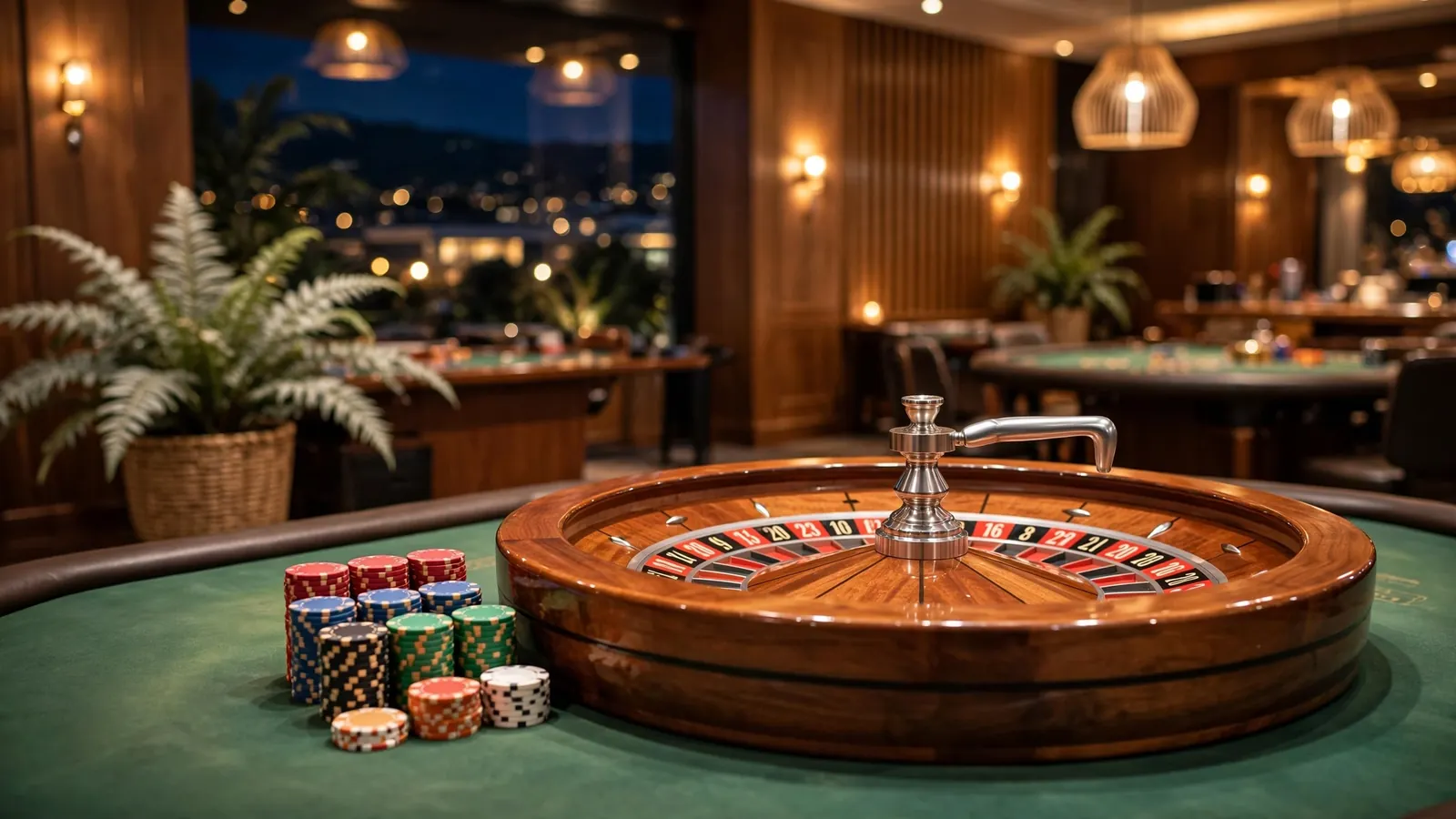
How Online Roulette Works for Real Money
Online roulette can be played in two modes: free play and real-money play. The wheel and betting layout may look similar in both, but the stakes are different. In free play, you do not wager cash. In real-money play, you place bets using money in your account, and a winning result can affect your balance. A free game can help you see how a roulette interface works; it does not reproduce the financial consequences of wagering.
The wheel type matters because it affects the game’s house edge. The house edge is the mathematical advantage built into the game’s rules. It describes the long-run effect of those rules, not what must happen in a particular session. A result can go either way on an individual spin, but the wheel’s structure determines the underlying odds.
French and European roulette
French and European roulette use a wheel with 37 numbered pockets, from 0 to 36. Both have a stated house edge of 2.70%. That shared figure makes them different from American roulette, although French roulette has additional rules that can reduce the edge further in the relevant circumstances.
If you’re choosing a real-money roulette site in New Zealand for 2026, check the available operator details before deciding where to play. This list gives you a concise reference to the information provided for each operator.
-
Neospin
- License
- Tobique Gaming Commission, licence no. 0000064
Neospin is listed with a licence from the Tobique Gaming Commission, licence no. 0000064.
-
N1 Casino
- License
- Malta Gaming Authority, licence no. MGA/B2C/394/2017
N1 Casino is listed with a Malta Gaming Authority licence, no. MGA/B2C/394/2017.
-
Lamabet
- Payout speed
- 1-3 business days
Lamabet’s listed payout speed is 1–3 business days.
-
BitStarz
- License
- Curaçao Gaming Authority, licence no. OGL/2024/165/0185
BitStarz is listed with a Curaçao Gaming Authority licence, no. OGL/2024/165/0185.
-
Play Grand
- License
- Malta Gaming Authority, licence no. MGA/B2C/370/2017
Play Grand is listed with a Malta Gaming Authority licence, no. MGA/B2C/370/2017.
-
Zotabet
- License
- 07017519840
- Payout speed
- 1-3 business days
Zotabet’s listed details include licence identifier 07017519840 and a payout speed of 1–3 business days.
-
Ricky Casino
- License
- Tobique Gaming Commission, licence no. 0000002
Ricky Casino is listed with a Tobique Gaming Commission licence, no. 0000002.
-
Wintino
- Payout speed
- 1-3 business days
Wintino’s listed payout speed is 1–3 business days.
-
7Bit Casino
- License
- Tobique Gaming Commission, licence no. 0000091
7Bit Casino is listed with a Tobique Gaming Commission licence, no. 0000091.
French roulette includes *la partage* and *en prison*. These rules affect what happens to certain bets when the ball lands on zero. Under *la partage*, an eligible bet can be partly returned; under *en prison*, it can remain in play for the next spin. Their effect is to lower the house edge further. The benefit depends on the rule being applied to a bet that qualifies, so the game’s displayed rules matter. The basic 2.70% figure should not be mistaken for the final edge on every French roulette bet when these rules apply.
European roulette also has 37 pockets, numbered from zero to 36, and a 2.70% house edge. If you want to play European roulette for real money, the key comparison is not a different pocket count from French roulette, but whether the French rules are present. A game labelled “French” should be checked for *la partage* or *en prison* rather than assumed to include them merely because of its name.
American roulette
American roulette has a higher stated house edge: 5.26%. That means its rules are less favourable to the player over time than the stated edge for French or European roulette. The difference is not a prediction that a particular spin will lose, nor does a lower house edge guarantee a winning session. It is a comparison of the games’ mathematical structures.
When comparing online roulette games, look at the rules for the wheel you are actually selecting. The game name and visual design are not enough to establish its house edge. In particular, do not treat American roulette as interchangeable with European roulette just because both use the familiar roulette layout. The stated edges differ, and that changes the long-term expectation attached to the game.

What the figures tell you—and what they do not
A house edge is useful for comparing roulette variants, but it is not a personal forecast. It does not say when a win will occur, how much a session will return, or whether you will finish ahead. Nor does the label “real money” tell you that a particular game is more favourable. The relevant game details are the wheel type, its stated edge and, for French roulette, whether the additional rules apply to the bet you make.
Free and cash wagering therefore share a game format but not the same financial stakes. In free play, a result does not change your real-money balance. In a real-money game, the outcome affects the money you have wagered. A demo can show the sequence of selecting a bet and seeing a spin resolve, but it cannot establish how you will fare when money is involved.
For a straightforward comparison, French roulette with its additional rules may have a lower edge than the shared 2.70% figure for French and European roulette; European roulette is stated at 2.70%; American roulette is stated at 5.26%. These figures describe the games, not a method for choosing winning numbers. They also do not support a claim that any online roulette game will produce a profit. The useful first step is to identify the wheel and understand its rules before treating two games with similar screens as equivalent.
French Roulette
Uses a 37-pocket wheel with a 2.70% house edge. Rules like la partage and en prison can reduce the edge further.
European Roulette
Uses a 37-pocket wheel with a 2.70% house edge. It does not typically include the specific French rules.
American Roulette
Features a higher stated house edge of 5.26%, making its mathematical structure less favourable to the player.
New Zealand’s 2026 Online Casino Rules—and What Comes Next
The rules for online roulette in New Zealand changed when the Online Casino Gambling Act 2026 took effect on 1 May 2026. The Act covers online casino table games, including roulette, and creates a domestic licensing framework for online casino gambling. It marks a shift from a system in which online casino services from overseas were not licensed or supervised by a New Zealand regulator to one with a local process for granting and overseeing licences.
The change does not mean every site accessible to Kiwi punters is already locally licensed. The new framework is being introduced in stages. Providers that were serving customers in New Zealand before the Act began may continue during the transition, subject to its transitional rules. That permission is temporary: they must stop providing online casino gambling in New Zealand if they have not applied for a licence by 1 December 2026. A provider whose application is declined must leave the market.
Before the new law, the Gambling Act 2003 prevented online casinos from being based in New Zealand. Offshore services were not licensed or supervised domestically, and customers who had a dispute with an offshore site had no local government recourse. Kiwi punters were not breaking the law simply by playing on those sites. The 2026 Act changes the regulatory structure for providers; it does not turn the earlier situation into a retrospective offence for players.

Who oversees the system?
The Department of Internal Affairs (DIA) is New Zealand’s primary gambling regulator and oversees the online casino licensing framework. It is responsible for the licensing process and assessing applicants. The Gambling Commission has a distinct decision-making role: it hears and determines casino licence applications, issues licences and approves changes to licence conditions.
That division matters. The DIA’s role in overseeing regulation and examining applicants should not be confused with the Gambling Commission’s responsibility for deciding licensing applications. A licence is a formal regulatory decision, not simply a status a provider can claim for itself.
The framework allows a maximum of 15 online casino licences. Each licence is tied to a single brand, and an operator may receive no more than three licences in the initial process. Licences are initially granted for a period of up to three years, with the possibility of renewal for a further period of up to five years. These provisions set the shape of the licensing system; they do not establish that any particular roulette site has already received a New Zealand licence.
The transition also sets a deadline for providers already operating in the market. A provider that has not lodged a licence application by 1 December 2026 must cease online casino gambling in New Zealand. Applying is not the same as being approved: the application must still be assessed, and a declined application means the provider must stop operating in the market. The rules therefore distinguish between temporary permission to continue during the transition and authorisation under the completed licensing regime.
When will full regulation be in place?
The licensed system is not expected to be fully operational as soon as the Act comes into force. A report by web3bet.com says the DIA expects the fully regulated online casino system to be in place during 2027. That is an expectation about the timing of the system’s implementation, not confirmation that all licensing decisions will have been completed by a particular date.
For someone searching for online roulette for real money in New Zealand in 2026, the practical point is that the market is in transition. The Act is in force, but the new licensing framework is still being put into operation. The existence of a law covering roulette does not, by itself, show that a specific site has been granted a licence or that every provider currently accessible to New Zealand residents has the same regulatory status.
The transition is also not an indefinite extension of the previous arrangement. Providers already serving the country before 1 May 2026 may continue under the transitional provisions, but the application cutoff on 1 December 2026 determines whether they can continue beyond that stage while seeking approval. If they do not apply, they must exit the New Zealand market; if their application is refused, they must also cease operating here.

For readers, the key distinctions are between the law’s commencement, the transition period and the fully regulated system expected later. The Act’s commencement established the legal framework. Transitional provisions allow certain existing providers to continue for a limited period, subject to the application requirement. The Gambling Commission decides applications and licensing matters, while the DIA oversees the regulatory process. A report places the expected arrival of the fully regulated system in 2027, but that expectation should not be mistaken for a licence already being in place for any named operator.
Can Online Roulette Make You Money?
A roulette win can put money in your balance, but that is not the same as roulette being a dependable way to earn an income. The distinction is the house edge: the casino’s built-in mathematical advantage across the game. It does not decide what happens on a particular spin. It does shape the odds over repeated play.
In European and French roulette, the wheel has 37 pockets, numbered from 0 to 36. The stated house edge for both games is 2.70%. That figure describes the game’s long-run advantage for the house, not a guaranteed loss on every wager. You might win a spin, or a run of spins; the edge does not prevent that. It means that, over time, the underlying odds favour the casino rather than the person betting.
That is why a short session can give a misleading impression. A player may finish ahead because individual results vary, but a win does not change the odds of later spins. Nor does a losing stretch mean a win is now due. Each result is uncertain, while the house edge remains part of the game. A lucky outcome is possible; a repeatable income plan is another matter.
The phrase “easy way to make money” suggests a reliable route from betting to profit. Roulette offers no such certainty. The possibility of winning real money is real, but so is the possibility of losing the money wagered. A result on one spin cannot establish that the next one will be favourable, and a winning session cannot remove the mathematical disadvantage built into the game.
This also matters when you see claims about playing online and making money. A website or game can provide roulette for real-money play, but access to a game is not evidence that it is profitable for you. The same odds apply whether you play through a browser or another interface. Changing the format does not change the wheel’s probabilities.
“Free money” language deserves particular care. A free game is not, by itself, a source of withdrawable cash or proof that a player can turn roulette into income. Free play and real-money wagering are different modes; only wagering puts your own money at risk. Treating a free session as a forecast of real-money results also overlooks what changes when an actual balance is at stake.
The practical test is not whether someone can point to a roulette win. Someone can win, and a large result can happen. The useful question is whether the game gives you a sound basis for expecting profit over time. With a house edge, it does not. The edge is not a prediction of exactly when you will lose, but it is a reason not to treat roulette as a wage, side income or reliable way to meet expenses.

If you choose to play, regard any win as an uncertain result rather than income you can count on. The game can produce a profitable session, but that possibility does not overturn its long-run odds. Roulette is gambling, not a dependable money-making method.
How to Think About Winning—and Losing—at Roulette
A story about a large roulette win can be true without showing that roulette is a reliable way to make money. One result tells you what happened in a particular session; it does not establish what another player should expect. The distinction matters when a confident account, a winning streak or a strategy presented as a “roulette money maker” is used to imply that a repeatable profit is within reach.
Start by separating the size of a possible payout from the likelihood of keeping a profit. A bet can produce a substantial return if it wins, but that does not make the win likely or turn the bet into a sound income plan. The result of a spin is uncertain. A sequence of favourable outcomes can happen, as can a sequence of losses. Neither sequence is a promise about the next spin.
The house edge is a useful way to assess the underlying terms of the game. In French and European roulette, it is 2.70%. Both games use a wheel with 37 numbered pockets, from 0 to 36. That edge describes the casino’s mathematical advantage across play; it does not predict the result of an individual session. You might leave ahead after a short session, but a short-term win does not remove the disadvantage built into the game.
Do
- Decide in advance what you can afford to lose
- Treat the budget as entertainment cost
- Judge results by the whole session
Don't
- Increase stakes to recover losses
- Treat past spins as guarantees for the next
- Rely on a win as a dependable income plan
This is why claims about how to win big money in roulette deserve careful reading. Ask what the claim actually demonstrates. Does it describe a single outcome, or provide evidence that the method produces lasting profits? Does it show losing sessions as well as wins? A dramatic result is easy to remember and easy to promote. Without a complete account of the risks and losses, it cannot tell you whether a method works as advertised.
A betting pattern can change how you divide or time your wagers, but it cannot alter the wheel’s pockets or remove the house edge. A system that recommends changing bets after a loss may make the decisions feel structured; structure is not the same as an advantage. Nor does a run of one result make the opposite result due. Treating past spins as instructions for the next one confuses a record of what happened with a guarantee of what will happen.
If you choose to play, decide in advance what you can afford to lose and regard that amount as the cost of entertainment, not money you expect to earn back. Keep the distinction between your gambling budget and money needed for ordinary expenses. If you find yourself increasing stakes to recover losses, or continuing because a win feels just out of reach, pause rather than treating another spin as a solution.
It is also sensible to judge a result by the whole session, not by its most memorable moment. A large win may stand out while the wagers that came before it fade from view. A loss can prompt the opposite mistake: believing that persistence must eventually restore the balance. Neither reaction changes the odds.
Roulette can produce winning sessions, but a win is an outcome, not proof of a dependable method. Claims of easy profit should be treated accordingly: the game’s built-in edge remains relevant whether the story is about a streak, a system or one unusually large payout.

Free Roulette or Real-Money Play?
Online roulette is available in two forms: free play and play with real money at stake. The difference is not the wheel’s appearance or the name of a bet. It is whether you are wagering money that can be lost.
Free play suits someone who wants to explore the game without putting money at risk. You can use it for entertainment or to get comfortable with the layout and the way a roulette round works. Since no real-money wager is involved, a result in free play does not mean you have won cash or created a balance that can be withdrawn.
Real-money play is different because each wager can affect your funds. A win may return money according to the bet and game rules, while a losing wager costs the amount placed. That makes it important to decide in advance whether you are comfortable risking money, rather than treating the switch from free play as a small technical step.

Neither mode tells you what will happen in a later round. A run of wins in free play does not establish that you will win when money is involved. Nor does practice make a particular result more likely. Free play can help you understand how to use a game, but it cannot demonstrate that you have found a reliable way to earn money.
The same caution applies in reverse: a free game is not a test that proves you would lose with real stakes. Its purpose is to let you play without wagering real money, not to predict how a future session will go. If your main aim is to enjoy roulette without financial risk, free play keeps that boundary clear. If you choose to wager real money, treat that as a separate decision with a real possibility of loss.
Before choosing, be clear about what you want from the session. Free play is the straightforward option when you want to try roulette for fun with no money at stake. Real-money play is for wagering, and should not be mistaken for a more accurate or more promising version of the game. The mode changes the financial consequences; it does not provide evidence that the next result will favour you.
Even-Money Bets: Red, Black, Odd and Even
Red or black and odd or even are called even-money bets because a winning stake returns an amount equal to the stake, as well as the original stake. They are outside bets: you place them on broad categories printed around the roulette layout, rather than selecting an individual number or a small group of numbers.

The other common outside bets cover high or low numbers, and columns or dozens. High/low divides the numbered pockets into lower and higher groups; columns and dozens refer to larger sections of the layout. These choices differ in what they cover, but they are all placed outside the numbered betting area. The table’s labels show where each bet belongs.
The green zero matters. On a French or European wheel, the 37 pockets run from 0 to 36. Zero is neither red nor black, odd nor even, high nor low, and it is not part of a dozen or column. So a bet on one of those categories does not win when the ball lands on zero. That interruption is why an even-money payout does not mean the bet has no house edge.
French and European roulette both have a house edge of 2.70%. The edge is the casino’s mathematical advantage over repeated play; it is not a prediction of what will happen in an individual spin. In French Roulette, rules such as la partage and en prison can reduce the edge further, but the standard figure for the French and European games remains a useful point of comparison when those special rules do not apply.
If you are looking at roulette live for real money, the same bet names describe the categories you can select on the table. Check the game’s layout and rules before placing a wager: a familiar label does not remove the zero or change the wheel’s underlying odds. An even-money bet is a straightforward way to choose a broad outcome, not a special class of bet that avoids the house advantage.
Free Roulette Without a Deposit: What Free Play Means
Free roulette means you can play the game without wagering real money in that play mode. Online roulette is available both for free and for real money, but those are distinct ways to play. The word “free” describes the play mode; by itself, it does not tell you what a particular site may offer alongside it.
That distinction matters when you see phrases such as “free roulette without a deposit” or “no-wager roulette.” They can sound like a promise about cash, but free play does not establish that any winnings can be withdrawn. Nor does the label alone explain whether a separate offer has conditions attached. Read the terms that apply to the specific game or offer rather than treating “free” as a guarantee.
A free game is useful if you want to try roulette without staking money. It can let you become familiar with the game’s layout and the way a round works, but playing for free is not the same as placing a real-money bet. A result in free play does not, by itself, create money to withdraw or show what would happen in a real-money session.
Be precise about what you are looking at. Is it a free roulette game, or an offer described as free? Those labels are not interchangeable. The first refers to playing without a real-money stake; the second may have terms that determine what, if anything, can be claimed. The wording on a page should not be read as proof that there are no conditions.

If your aim is simply to play without putting money at stake, choose the free-play mode and check that the game is not asking you to wager real money. If you are considering a cash-related offer, read its terms separately. “Free” is a description, not a promise of withdrawable cash or of unrestricted play.
Using a Roulette App: Check Age and Identity Requirements
A roulette app is only one way to access an online casino; it does not remove the checks required to play for real money. On a licensed site in New Zealand, you must prove both your age and your identity before playing. The minimum age is 18.
These checks are known as KYC, short for “know your customer”. In practice, the operator needs to establish that you are old enough to use the service and that you are the person represented by the account. Treat verification as a condition of access, not as an optional step you can leave until after you start playing.
That matters when assessing a real-money roulette app. A polished interface or a roulette game in the app does not, by itself, show that the service is licensed or that you have completed the required checks. Nor does downloading an app establish that you are eligible to play. The relevant requirement applies to the licensed casino service, whether you reach it through an app or another channel.
Before entering personal details, make sure you understand which operator is asking for them and why. Do not assume that an app’s name, appearance or availability proves its status. The checks are about confirming age and identity; they are not a guarantee of winnings or a way to change roulette’s odds.
- Confirm you are at least 18 years old
- Prepare valid identity documentation for KYC checks
- Verify the operator is licensed in New Zealand
A search for the best real-money roulette app can make the choice sound like a comparison of screens and features. For access to a licensed site, however, the essential point is whether you can meet its age and identity requirements. No app name or ranking can substitute for that check. If you are under 18, you cannot play roulette for real money on a licensed site in New Zealand.
Can You Double Your Money on Roulette?
A roulette bet can produce a return that is greater than the amount staked, but no choice of bet makes that result certain. Whether your balance doubles depends on the bet you place, the result of the spin and how much of your balance you put at risk. A win on one spin does not make the next spin more likely to win.
The distinction between a bet’s payout and your overall balance matters. A winning bet may return your stake along with winnings, while a losing bet reduces the balance. If you stake only part of your money, a win might not double your total balance; if you stake more, a loss can take away more of it. The result is never guaranteed simply because a particular betting pattern has been chosen.
French and European roulette each have a house edge of 2.70%. Both use a wheel with 37 pockets, numbered from 0 to 36. The house edge describes the game’s mathematical advantage over time; it is not a prediction of what will happen on a particular spin. You could win or lose in a short run, but the edge does not disappear when you change your bet or wait for a certain sequence.
That is why a plan to double money by repeating a bet after a loss cannot remove the underlying risk. A run of losses can continue, and increasing stakes does not alter the wheel’s outcomes. A win may arrive, but it cannot be scheduled or secured by a progression.

If you are considering roulette because you need a particular amount of money, treat a possible win as uncertain rather than as a dependable way to reach that target. Decide beforehand what you can afford to lose, and do not raise your stake to recover losses. No betting approach changes the house edge or guarantees that your balance will double.
What “Real-Money Roulette” Actually Means
Real-money roulette is roulette played by placing wagers with money, rather than using a free-play mode. The distinction is about what you stake: in a real-money game, your bets are monetary; in free play, the game lets you play without wagering real funds.
Online roulette is available in both modes. The wheel and betting interface may look similar, but that does not make the two forms equivalent. A free game lets you experience the format without putting money on a spin. A real-money game involves an actual financial stake, so the result matters to your balance.

The phrase “money roulette” can be used loosely, but the useful question is whether the game requires you to wager funds. If it does, it is real-money play. If it is labelled as a demo or free game and you are not staking money, it is not real-money roulette, even if the screen shows chips, a wheel and a running total.
That distinction also keeps the term from being mistaken for a promise about outcomes. “Real money” describes the way you play, not a special version of roulette or a greater likelihood of winning. It does not, by itself, tell you what a particular game’s rules are or what happens to any balance after a spin. Those are separate details to understand before wagering.
For Kiwi punters, the simplest way to read the label is literal: real-money roulette means placing bets with money. Free roulette means playing without that stake. Both are available online, but only the first involves wagering real funds.
Table & Live Casino Games in New Zealand
Content created by the «casinohubnz.com» team