
Understand Baccarat Before Choosing a Casino
 Available in US
See how the hands are scored, why betting progressions do not change the odds, and what licensing and bonus terms can establish.
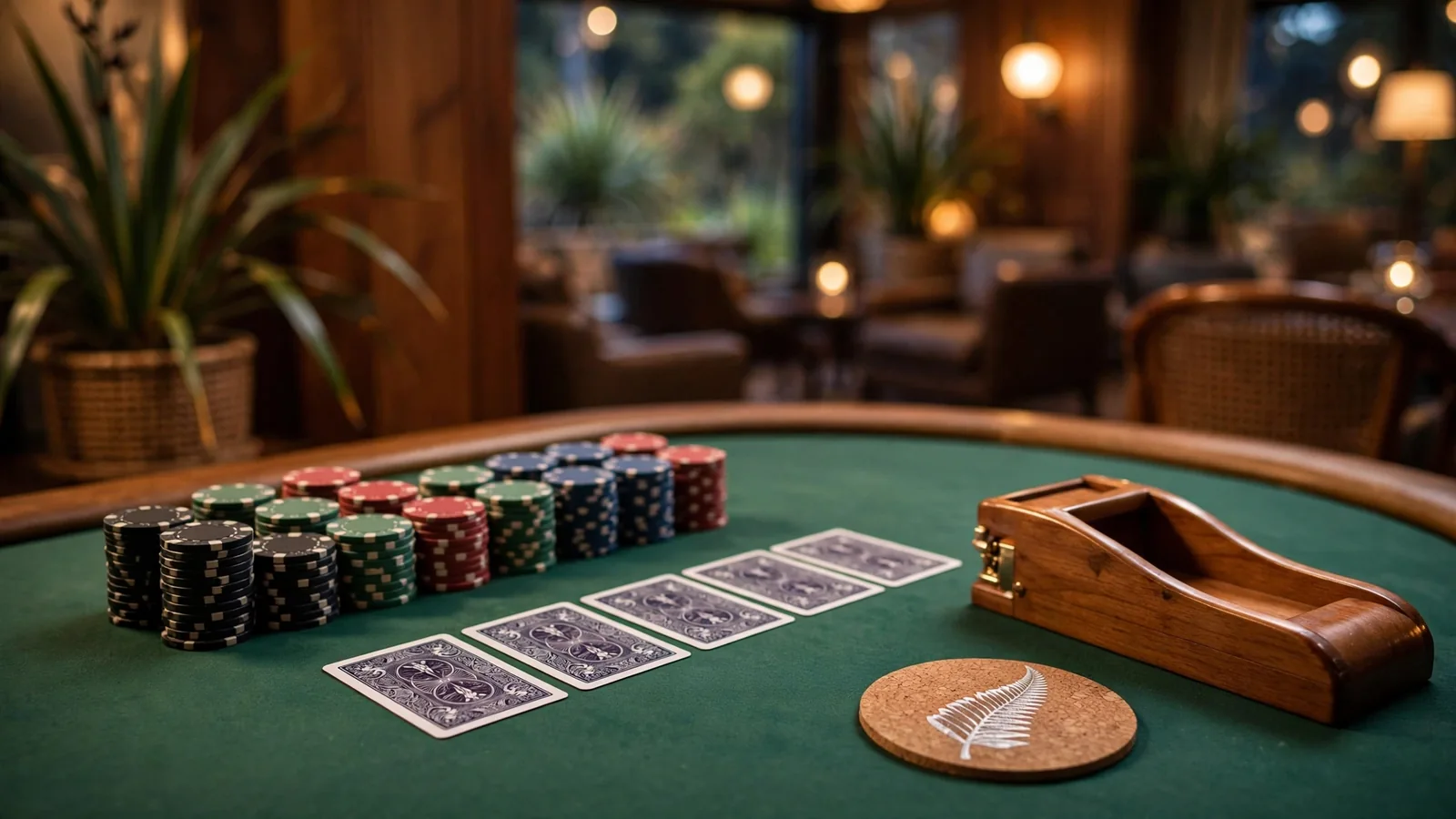
How Baccarat Hands and Bets Work
Baccarat is a casino card game built around a simple target: the winning hand is the one with a total closest to 9 without going over. You do not need to make decisions about which cards to draw to understand the basic aim. The central choice is what to back: Player, Banker or Tie.
Those three options are the betting categories shown on a baccarat table. Player and Banker refer to the two hands being compared, while Tie is the option for a result in which their totals match. The labels can be misleading if you are new to the game. A Player bet does not mean that you are playing against the casino in the way you might in a head-to-head contest, and a Banker bet does not mean that you take on the role of the dealer. They name the outcomes you are backing.
The word “hand” means the cards grouped together for one side of the comparison. The aim is not to build the highest possible total: a total above 9 would miss the target. Instead, baccarat is concerned with which hand finishes closer to 9. That single target explains why the game’s betting choices are easy to identify even before you know the finer rules.
When choosing a baccarat casino in New Zealand, you need clear, verifiable details to help assess your options. Use this list as a reference point and check that each option suits your needs.
-
Neospin
- License
- Tobique Gaming Commission, licence no. 0000064
Neospin lists a licence from the Tobique Gaming Commission, licence no. 0000064.
-
N1 Casino
- License
- Malta Gaming Authority, licence no. MGA/B2C/394/2017
N1 Casino lists a Malta Gaming Authority licence, no. MGA/B2C/394/2017.
-
Lamabet
- Payout speed
- 1-3 business days
Lamabet lists a payout speed of 1–3 business days.
-
BitStarz
- License
- Curaçao Gaming Authority, licence no. OGL/2024/165/0185
BitStarz lists a Curaçao Gaming Authority licence, no. OGL/2024/165/0185.
-
Play Grand
- License
- Malta Gaming Authority, licence no. MGA/B2C/370/2017
Play Grand lists a Malta Gaming Authority licence, no. MGA/B2C/370/2017.
-
Zotabet
- License
- 07017519840
- Payout speed
- 1-3 business days
Zotabet lists licence number 07017519840 and a payout speed of 1–3 business days.
-
Ricky Casino
- License
- Tobique Gaming Commission, licence no. 0000002
Ricky Casino lists a licence from the Tobique Gaming Commission, licence no. 0000002.
-
Wintino
- Payout speed
- 1-3 business days
Wintino lists a payout speed of 1–3 business days.
-
7Bit Casino
- License
- Tobique Gaming Commission, licence no. 0000091
7Bit Casino lists a licence from the Tobique Gaming Commission, licence no. 0000091.
What the three bets mean
A Player bet backs the Player hand to finish closer to 9 than the Banker hand. A Banker bet backs the Banker hand to finish closer. A Tie bet backs the two hands to finish with matching totals. These are predictions about the result, not choices of cards or playing roles.
That distinction matters when you first look at a casino baccarat table. The layout may place the Player and Banker betting areas opposite one another, with a separate Tie area. The visual arrangement can make the game look like a contest between the person at the table and the dealer. In the standard betting structure, however, you select one of the named outcomes; the labels are not instructions to take control of either hand.
The three options also give the game its basic shape. You can back one hand to come closer to the target, or choose the possibility that both totals will match. A bet is therefore tied to the result of the comparison, rather than to the individual cards appearing in a hand. The details of how a hand is conducted belong to the table rules, but the purpose of each betting area can be understood without following every action.
The target and the deck
Baccarat is played with a group of decks, and the number used can range from three to eight. The deck count describes the cards available in the game; it does not change the central objective. Whether the table uses the lower or higher end of that range, the comparison remains based on closeness to 9.
 Blackjack Casinos in NZ: Rules, Tables and How to ChooseLearn how casino blackjack works, what to check when choosing an NZ site, and how RNG and live tables differ; an ace…
 Online Blackjack in New Zealand: Rules and PlayLearn how to compare table rules, understand payouts and insurance, practise with free games, and assess live-dealer options.
This is a useful way to approach a casino baccarat game if the table’s layout or terminology is unfamiliar. First identify the two hands being compared. Then read Player and Banker as the names of those hands, and Tie as the matching-total outcome. Finally, keep the target in mind: closest to 9 without exceeding it. You do not need to mistake the names for personal roles or assume that the highest total always wins.
Baccarat is often called a straightforward game because its central decision is limited to those outcome bets. That does not mean every aspect of the game is identical across tables. The rules attached to a particular version can affect how the game is presented, and the table information is where those details belong. The basic terms still provide a reliable starting point: a target, two hands and three possible betting categories.
If you are looking at a free baccarat game before trying a casino version, use it to become familiar with the labels and the comparison between hands. A practice setting can help you recognise where Player, Banker and Tie appear on the interface. It cannot make a particular result more likely, and it does not replace checking the rules shown for the version you are using. The useful preparation is modest: know what each bet names and what the game is trying to achieve.
This is also why asking how to win at baccarat should begin with the structure rather than with a promised system. The game’s basic objective is clear, but understanding the bet labels is not the same as controlling the outcome. Player and Banker are competing hand outcomes; Tie is the matching-total outcome. The aim is for a hand total to come as close as possible to 9 without going above it. Once those pieces are clear, the table is easier to read without confusing a simple betting choice with a guarantee of success.
What Happens During a Hand at the Table
At a baccarat table, you place a wager on the outcome you think will occur, then follow the cards as the hand is completed. In Punto Banco, you are not playing a hand against the dealer in the way you would in poker. The dealer oversees the game, while you choose which result to back.

The betting choices are Player, Banker and Tie. “Player” and “Banker” identify the two hands being compared; they do not mean that you are taking control of either hand. You can back one side, or choose Tie if you think the hands will finish level. Once betting closes, the cards are dealt and the result is determined by the hands’ totals.
That distinction is useful when learning how to play baccarat at a casino: you are selecting an outcome, not deciding which cards to take or how to play a hand. In Punto Banco, the dealer handles the game’s procedure. Your part is to make a selection before the deal and then see whether the result matches it.
A hand is therefore straightforward to follow. First, decide which of the available outcomes you want to back and place your wager in the corresponding betting area. The table then moves into the deal. Watch the Player and Banker hands as they are revealed, and wait for the result to be settled. If you are playing online, the same basic distinction applies, even if the table is presented on a screen rather than in a physical room.
 Craps Casinos in New Zealand: Rules and OddsLearn how the come-out roll sets a craps round, how Pass Line bets resolve, and what to consider in online play; 7…
 Online Craps in New Zealand: Rules and PlayCompare RNG and live-dealer craps, learn how come-out rolls and points work, and check what free play and wagering terms mean.
If you are new, take a moment to identify the three betting areas before placing anything. The labels refer to possible outcomes, not to different ways of playing. It is easy to mistake “Player” for an instruction to play against the house; in Punto Banco, that is not what it means. You are backing the Player hand, while the dealer runs the game.
There is no way to make a particular result certain. To win a baccarat hand, your chosen outcome has to match the result; choosing Player or Banker does not give you control over the cards. The Tie option is another possible outcome, not a way to influence either hand. Keeping that simple distinction in mind makes the table easier to read and helps prevent a common misunderstanding: baccarat asks you to choose what to back, not to make decisions for the hands as they are dealt.
Punto Banco Rules, Payouts and the Banker Commission
Punto Banco is a baccarat format in which you wager on which hand will win; you are not making decisions for a hand of your own. The available bets are Player, Banker and Tie. The names identify the hands, not who is playing against the dealer: the Player and Banker hands are both part of the game.
Punto Banco Basics
In this baccarat format, you wager on which hand will win without making decisions for the hand yourself. The available bets are Player, Banker, and Tie.
A winning Player bet pays even money: your stake is matched by the winnings. A winning Banker bet also pays even money before commission, but the casino deducts a 5% commission from the winnings. That deduction is why the Banker payout is slightly lower in practice. The standard Banker bet has a house edge of 1.06% once the commission is included, compared with 1.24% for Player.
The Tie bet pays more when it wins, but its cost is reflected in a much higher house edge. At an 8-to-1 payout, the Tie bet’s house edge is 14.36%. That makes the headline payout a poor guide to how favourable a wager is: a larger return on a winning hand does not, by itself, mean a better bet.
| Bet | Payout | House edge |
|---|---|---|
| Banker | Even money, less 5% commission on winnings | 1.06% |
| Player | Even money | 1.24% |
| Tie | 8 to 1 | 14.36% |
The house edge is the built-in mathematical disadvantage attached to a bet over repeated play. These figures make the differences between the three options easier to compare, but they do not tell you what will happen in a particular hand.
Some tables offer commission-free baccarat. “Commission-free” does not mean every Banker win receives the standard even-money payout. If the Banker hand wins with a total of 6, the winning bet pays half money, or 0.5 to 1, rather than even money. This reduced payout is the condition to check before choosing that version; it is separate from the usual commission deduction.
The label can make the table sound simpler, but it changes how a particular Banker result is paid. The Banker bet in commission-free baccarat has a house edge of 1.46%, compared with 1.06% for the standard Banker bet after commission. So the relevant comparison is not just whether a commission is charged. It is also how the table treats the Banker hand when it wins with a total of 6.
There is no special casino baccarat trick that alters these payout rules. Before betting, check whether the table charges the Banker commission or uses the reduced payout on a Banker 6, then compare the terms with the bet you intend to make.

How Baccarat Casinos Make Money—and What That Means for You
A casino does not need to win every baccarat hand to have a mathematical advantage. Its edge comes from the rules and payouts: over repeated betting, the expected returns are structured so that the casino keeps a share of the money wagered. That advantage is called the house edge. It describes a long-run expectation, not a promise about what will happen in any one session.
This distinction matters if you are trying to understand how casinos make money on baccarat. A player may finish ahead, while another may lose quickly; neither result changes the underlying odds. The casino’s advantage is not that it can control each hand. It is that the game’s payout structure favours the house when wagers are considered across many hands.
Why the Tie bet costs more
The Tie bet can look appealing because its payout is larger than the even-money returns associated with the main hand bets. But the size of a payout alone does not tell you whether a wager is favourable. The chance of the result and the amount returned have to be considered together.
At an 8-to-1 payout, the Tie bet carries a house edge of 14.36%. In practical terms, that is a substantially more expensive bet, mathematically, than the standard Player or Banker options. A high payout does not cancel out the disadvantage built into the wager. The Tie bet is not mathematically sustainable as a primary betting strategy.
That does not mean a Tie result cannot occur or that a particular Tie wager must lose. It means the payout does not compensate for the wager’s underlying odds over time. If you are comparing bets, the relevant question is not simply which one pays more when it wins, but how much of your stake the structure is expected to return across repeated play.
What “commission-free” changes
Some baccarat tables remove the commission normally associated with a winning Banker bet. That may sound like a straightforward improvement, but the casino can balance the offer by changing the payout rule. In commission-free baccarat, the Banker bet has a house edge of 1.46%.
The trade-off is important: removing a commission does not necessarily make a bet better value. The reduced charge is only one part of the calculation; the payout conditions also affect the overall edge. A table can advertise commission-free Banker bets while still retaining a mathematical advantage for the casino.
So when you compare baccarat tables, look beyond the label. Check how the Banker bet is paid and whether a special outcome changes the return. The name of the format tells you less than the full payout structure does.

What the edge means for your money
The house edge is not a fee deducted from every bet, nor does it identify what a casino will earn from you personally. It is a statistical measure of the game’s design. Your results can vary sharply from that expectation over a short period, because hands are separate events and short runs can favour either side.
For you, the practical consequence is that time spent betting and the size of your wagers both matter to how much money is exposed to the game. The edge applies to the amount wagered over play, not merely to the balance you bring to the table. Reusing winnings for further bets also puts those amounts at risk.
There is no way to turn an unfavourable house edge into a guaranteed win by choosing a particular table label or focusing on a large payout. To understand the casino’s advantage, compare the actual bet conditions and payouts. To decide whether a game is worth playing, also consider how much you are prepared to lose; the edge describes the casino’s advantage, not a forecast of your personal outcome.
Live Baccarat: Punto Banco, Speed and Results
Live baccarat brings a streamed table and a human dealer into the online game. You place your wager through the casino interface, then watch the cards dealt at the table. The format can make the game feel more immediate than an automated version, but it does not change the underlying uncertainty of each hand.
A specialist review of live baccarat at NZ-friendly online casinos describes the games it surveyed as almost exclusively using Punto Banco. That qualification matters: it is a snapshot of the games covered by that review, not a permanent description of every casino’s catalogue. In Punto Banco, you bet on Player, Banker or Tie; you are not choosing cards or making decisions for either hand. The dealer runs the hand according to the game’s rules.
What the live format changes
The main difference is how you experience the game. A live stream lets you follow the dealer and cards as the hand unfolds, while the betting interface handles your selection and stake. The stream may help you see what is happening at the table, but it does not reveal what the next cards will be. The appeal is presentation and atmosphere, not a player’s ability to influence the deal.
Speed Baccarat changes the tempo. A specialist review reports that tables in this format deal 60 to 80 hands per hour. Treat that as a reported rate, not a promise about every table: pace can vary by game and provider. More hands in a given time can also mean less time between decisions, so the practical difference is not just a brisker stream. You have fewer pauses in which to reconsider whether to continue.
That pace makes it worth setting a spending limit before joining a table and sticking to it. Live presentation can make a sequence feel continuous, and a faster format can shorten the time between wagers. Neither feature improves the odds. If you prefer time to think between hands, a slower table may suit you better than Speed Baccarat.

Reading the results display
Many baccarat interfaces show recent outcomes in a history panel or chart. These records can help you see what has already happened at that table, but they are not a forecast. A run of Banker wins, Player wins or Ties does not make a different result due next. Recent baccarat results do not predict the next hand.
That distinction is especially useful when a display uses streaks or patterns that look meaningful. The panel is a record, not a signal. It cannot establish that a particular side is more likely to win the next hand, and following a visible pattern does not change the game’s probabilities.
If you use the history panel, read it as a log of completed hands only. Choose a bet on its own terms, rather than treating the sequence on screen as evidence about what comes next. A live dealer and a detailed results display may make the session easier to follow; neither gives you advance knowledge of the deal.
Baccarat Betting Strategies: Why Progressions Don’t Beat the Odds
If you are looking for a way to win consistently at baccarat, a betting progression can look appealing. The idea is to change your stake after each result, often increasing it after a loss so that a later win might cover earlier losses. Martingale is a familiar example: after a losing bet, the player raises the next stake, then reduces it again after a win.
That changes the size of your bets, not the game’s underlying odds. A progression cannot make a particular outcome more likely, nor can it turn a negative expectation into a reliable source of profit. A run of wins may produce a gain, but a run of losses can require increasingly large stakes. Your available funds and the table’s maximum bet can eventually prevent the planned increase.
The Banker bet adds a further complication. In standard Punto Banco, a 5% commission is charged on winning Banker bets. If you are using Martingale to recover losses, a Banker win may return less than the full amount needed to restore your previous position. The recovery plan assumes that a win will make the sequence whole; commission can leave a shortfall instead. Continuing the progression to make up that difference means accepting more exposure, not improving the chance of success.
This is why a progression can feel persuasive while failing as a system. It gives a simple rule for what to stake next, and a win after losses can appear to confirm that the method worked. But that result does not show that the next sequence will behave the same way. Each hand remains uncertain, and changing your stake does not control its result.
A more cautious approach is to decide in advance what you are willing to lose and stop when you reach that point. Treat that as a limit on spending, not a technique for making a baccarat bet more likely to win. Progressions may organise your staking, but they do not remove the risk or provide a dependable way to recover losses.
Baccarat Casinos and Bitcoin: What the Available Facts Can—and Can’t—Establish
Looking for baccarat at an online casino that accepts Bitcoin involves two separate checks. One is whether the operator offers baccarat and supports Bitcoin for the transaction you intend to make. The other is whether its position in New Zealand fits the country’s changing online casino rules. Neither point should be inferred from the other: a baccarat table does not establish that Bitcoin is accepted, and a Bitcoin payment option does not establish that an operator is authorised under New Zealand’s domestic licensing regime.

Treat statements about payment methods as specific claims to verify, not as a general feature of a casino. An operator’s own current payment information is the relevant place to look for whether Bitcoin is supported and whether that applies to deposits, withdrawals, or both. Read the terms that attach to the method, rather than relying on a logo or an old description elsewhere. Payment arrangements can be distinct from game availability, so confirm separately that baccarat is offered to customers in New Zealand.
The regulatory question has its own timeline. The Online Casino Gambling Act 2026 establishes New Zealand’s domestic licensing framework for online casinos. It came into force on 1 May 2026, creating a transition period that runs until 1 December 2026. During that period, providers that were already serving customers in New Zealand before the Act took effect are permitted to continue operating until the transition ends. That does not mean the full licensed market is already in place.
A specialist market review reports that no operator is currently licensed and places the expected start of the licensed New Zealand online casino market around 1 December 2026. The wider regime is not expected to be fully operational until 2027. These are time-sensitive points: the status that matters is the operator’s position when you are considering using its service, not a statement made before the transition or a general promise about future licensing.
- Confirm baccarat is offered to New Zealand customers
- Check current Bitcoin support for your specific transaction
- Verify the operator's status under the Online Casino Gambling Act 2026
- Distinguish between transitional permission and a full license
Before this new framework, online casino services supplied from outside New Zealand were not licensed or supervised by a New Zealand regulator. A customer wagering with an offshore site in that period had no domestic government recourse. The fact that a site was accessible to New Zealand customers did not, by itself, mean it was regulated locally. The new Act changes the framework, but its introduction does not turn every existing offshore site into a New Zealand-licensed casino.
That distinction matters when a site promotes both baccarat and Bitcoin. A payment method is not a licence, and a casino’s claim that it serves New Zealand customers is not proof of domestic authorisation. Look for a clear statement of the operator’s status under the new framework and assess it against the current stage of the transition. If the operator describes itself as preparing to apply, that is different from holding a licence. If it refers to the transitional period, check whether the description concerns a provider that was already operating in New Zealand before the Act began.

The transition also has an end point. Permission to continue under transitional provisions is not the same as an ongoing licence, and it should not be read as a guarantee that a provider will remain available after the period closes. For a customer comparing online baccarat, the practical question is therefore not simply whether a site can be opened today. It is what legal basis the operator says applies now, and whether its status changes as the licensing regime takes effect.
Keep the checks separate and concrete:
- Confirm that baccarat is offered to New Zealand customers.
- Check the operator’s current information on Bitcoin, including whether it applies to the transaction you plan to make.
- Look for an explanation of the operator’s position under the Online Casino Gambling Act 2026, rather than treating access to a website as evidence of a licence.
- Revisit those details when the transition period ends, since today’s position may not describe the later licensed market.
This is not a claim that Bitcoin is inherently safer or less risky than another payment route. The relevant point is narrower: the payment method and the operator’s regulatory standing are different matters, and each needs its own confirmation. A site can describe a payment option without that telling you anything about its New Zealand licensing position; likewise, a licensing statement does not establish which payment methods are available.
For anyone comparing baccarat casinos from New Zealand, the timing is especially important. The Act is in force, but the domestic licensing system is moving through a transition, with the licensed market expected to begin around 1 December 2026 and the full regime anticipated in 2027. Do not treat a future licensing plan as a current licence, or transitional permission as permanent approval. Check the operator’s stated status and payment terms at the point you make a decision, and distinguish what applies now from what is expected to apply later.
Baccarat Casinos in New Zealand: Licensing and Bonus Terms
A baccarat table is only one part of choosing an online casino. In New Zealand, the licensing position matters too: the domestic framework is new, and the regulator’s responsibilities are divided between two bodies.
The Department of Internal Affairs (DIA) is New Zealand’s primary gambling regulator and oversees the online casino licensing framework. The Gambling Commission has the decision-making role for licences: it hears and determines applications, issues online casino licences and approves changes to licence conditions. In short, the DIA oversees the framework, while the Commission handles licensing decisions.
Department of Internal Affairs (DIA)
The primary gambling regulator in New Zealand that oversees the online casino licensing framework.
Gambling Commission
The body responsible for licensing decisions, including hearing applications and approving condition changes.
The Online Casino Gambling Act 2026 established New Zealand’s first domestic licensing regime for online casino gambling. It came into force on 1 May 2026, with a transitional period running until 1 December 2026. The licensed market is expected to launch around that date, and no operator is currently licensed. So a site offering baccarat to New Zealand players should not be described as domestically licensed simply because it accepts customers from the country.
The transition does not mean every provider can continue indefinitely. Only online casinos that were already serving people in New Zealand before 1 May 2026 may keep operating during the transition, subject to the Act’s provisions. The full licensing regime is not expected to be fully operational until 2027. If you are considering a baccarat casino, check whether it is operating under or preparing for the new licensing regime, and distinguish that status from an offshore licence. Before this Act, offshore online casino gambling was not licensed or supervised by a New Zealand regulator, and customers had no domestic government recourse.
What the licensing framework requires
Licensed operators must provide tools that let customers set deposit limits, use session timers, receive reality checks and choose self-exclusion. These are practical safeguards, not evidence that a particular site already holds a New Zealand licence. Confirm an operator’s status rather than treating a stated commitment to the new framework as proof of approval.
The distinction is especially relevant while the market moves through its transition. A casino may be accessible to New Zealand residents without holding a local licence; access alone does not establish that it has been approved by the Gambling Commission. Nor does an offshore licence amount to a New Zealand licence. A clear account of who regulates the operator, and under which framework, is more useful than a broad claim that a site is “regulated.”

Read the bonus calculation, not just the headline
A baccarat bonus can have a wagering requirement: a condition that requires eligible play before bonus-related funds can be withdrawn. The key detail is what the requirement applies to. A specialist review covering the operators on this page reports that each applies its wagering requirement to the deposit plus the bonus, rather than to the bonus alone. That distinction can make the amount of play required substantially different from what a bonus headline suggests.
Licensed operators must present bonus terms in clear, plain language. For bonus funds, the required wagering is at least 50 times within 30 days. Read the full conditions to establish which funds count, which games qualify and what happens if a condition is not met. Baccarat eligibility should be stated rather than assumed; a casino offering the game does not, by itself, establish that baccarat play contributes towards a bonus requirement.

Other conditions can affect whether bonus funds and associated winnings remain valid. Exceeding the maximum bet while using bonus funds—even once—can give the operator grounds to void the bonus and winnings attached to it. Withdrawal requests void all active or pending bonuses, and Skrill and Neteller deposits are excluded from bonus offers. All casinos operate under specific terms and conditions, including wagering requirements, eligibility restrictions and withdrawal limits, so review the full terms on the casino before accepting an offer.
Bonus marketing also has limits. Direct marketing generally goes only to account holders who have opted in, and bonuses should not be promoted to players showing signs of gambling harm. Those rules are part of responsible operation, not a reason to treat a bonus as a benefit without conditions.
For a person comparing baccarat casinos, the sensible distinction is between the game on offer, the operator’s licensing status and the terms attached to any promotion. The first tells you what you can play; the second tells you which regulatory framework applies; the third determines what you must do before bonus-related funds can be withdrawn. A favourable headline cannot answer all three.
What are the rules of Punto Banco, and how does the game work?
You bet on Player, Banker or Tie, then the dealer handles the deal. The winning hand is the one closest to 9 without going over; in Punto Banco, you bet on the outcome rather than playing against the dealer.
What is the Online Casino Gambling Act 2026, and how does it affect live baccarat?
It establishes a domestic licensing framework for online casinos operating in New Zealand. Licensed operators must provide deposit limits, session timers, reality checks and self-exclusion; the market is expected to launch around 1 December 2026, and no operator is currently licensed.
Which is better: commission or commission-free baccarat?
The commission version has a lower Banker house edge: 1.06% versus 1.46% for commission-free baccarat. In the commission-free version, a Banker win with a total of 6 pays half the usual even-money payout.
What does “wagering on deposit plus bonus” mean?
It means the wagering requirement applies to your deposit and bonus together, rather than to the bonus alone.
What is the house edge on Banker, Player and Tie bets?
In Punto Banco, the Banker edge is 1.06% after the 5% commission, and the Player edge is 1.24%. The Tie edge is 14.36% when it pays 8 to 1.
Table & Live Casino Games in New Zealand
Content created by the «casinohubnz.com» team